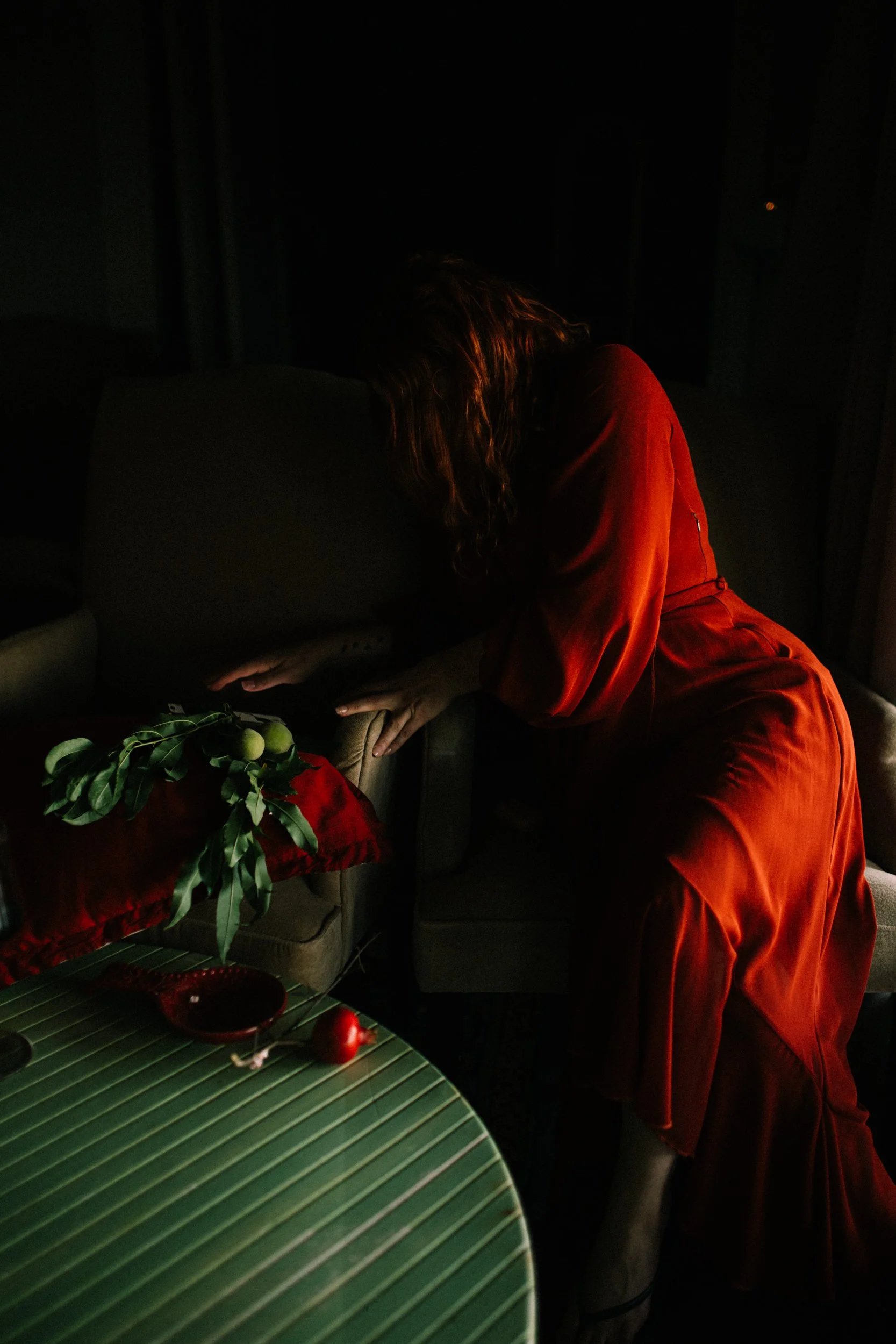
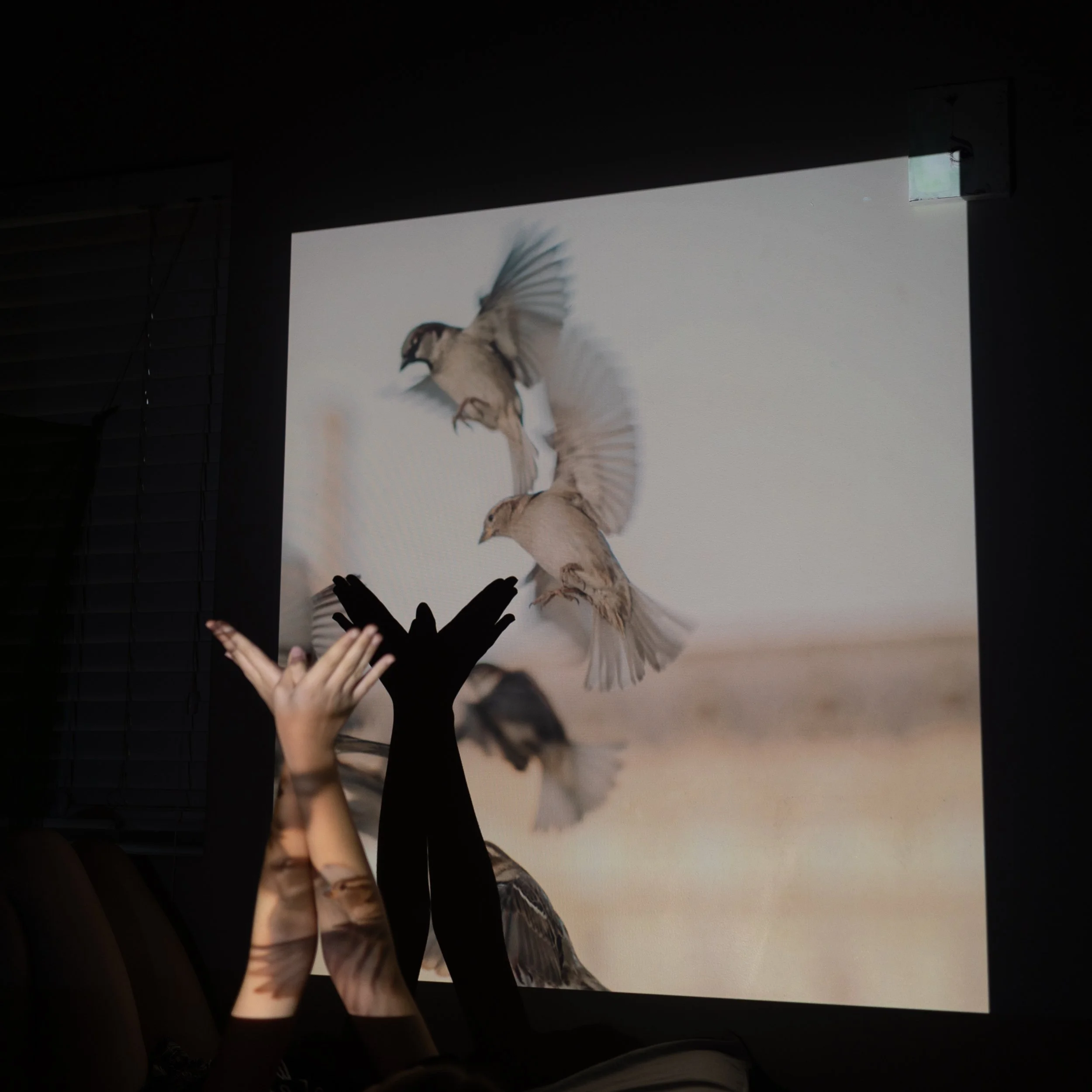
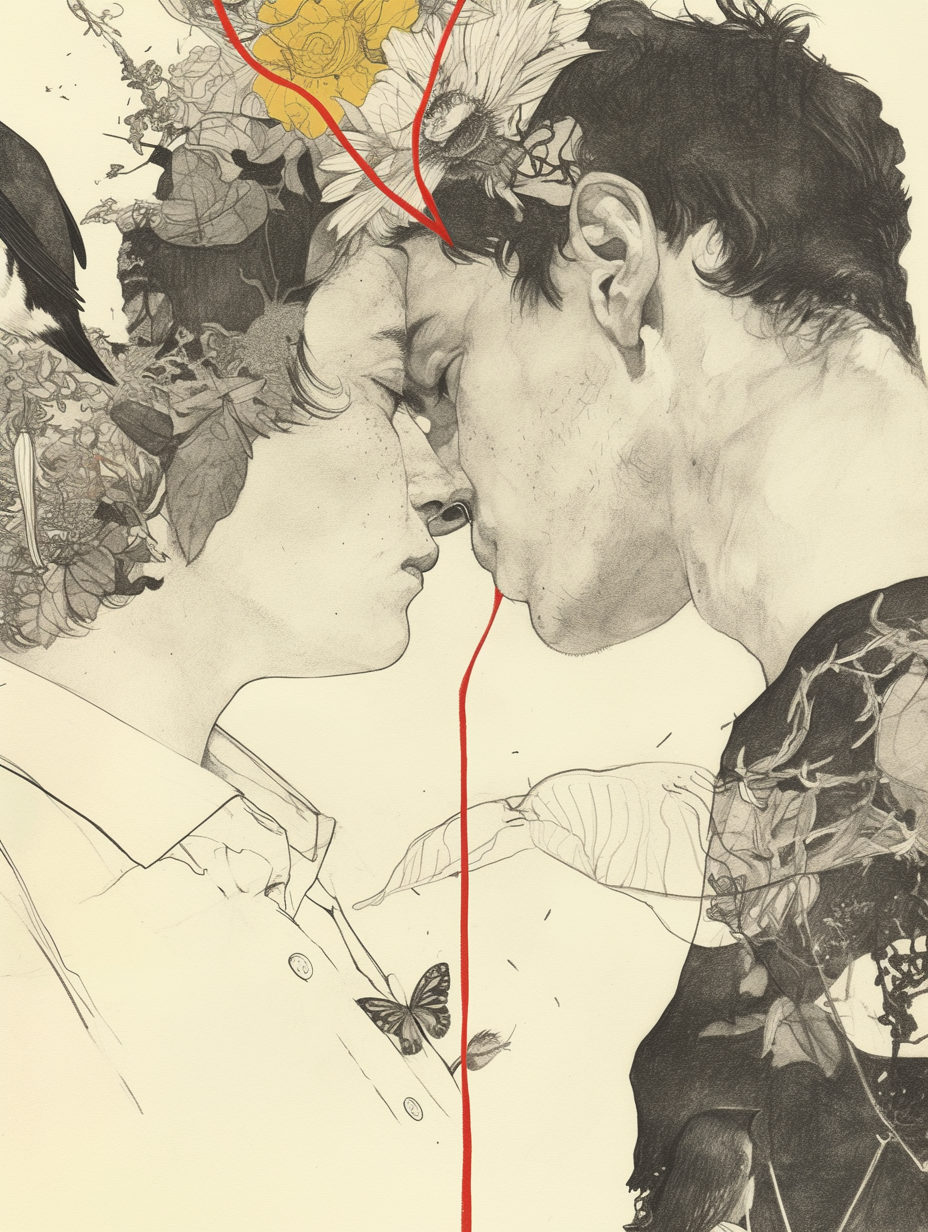
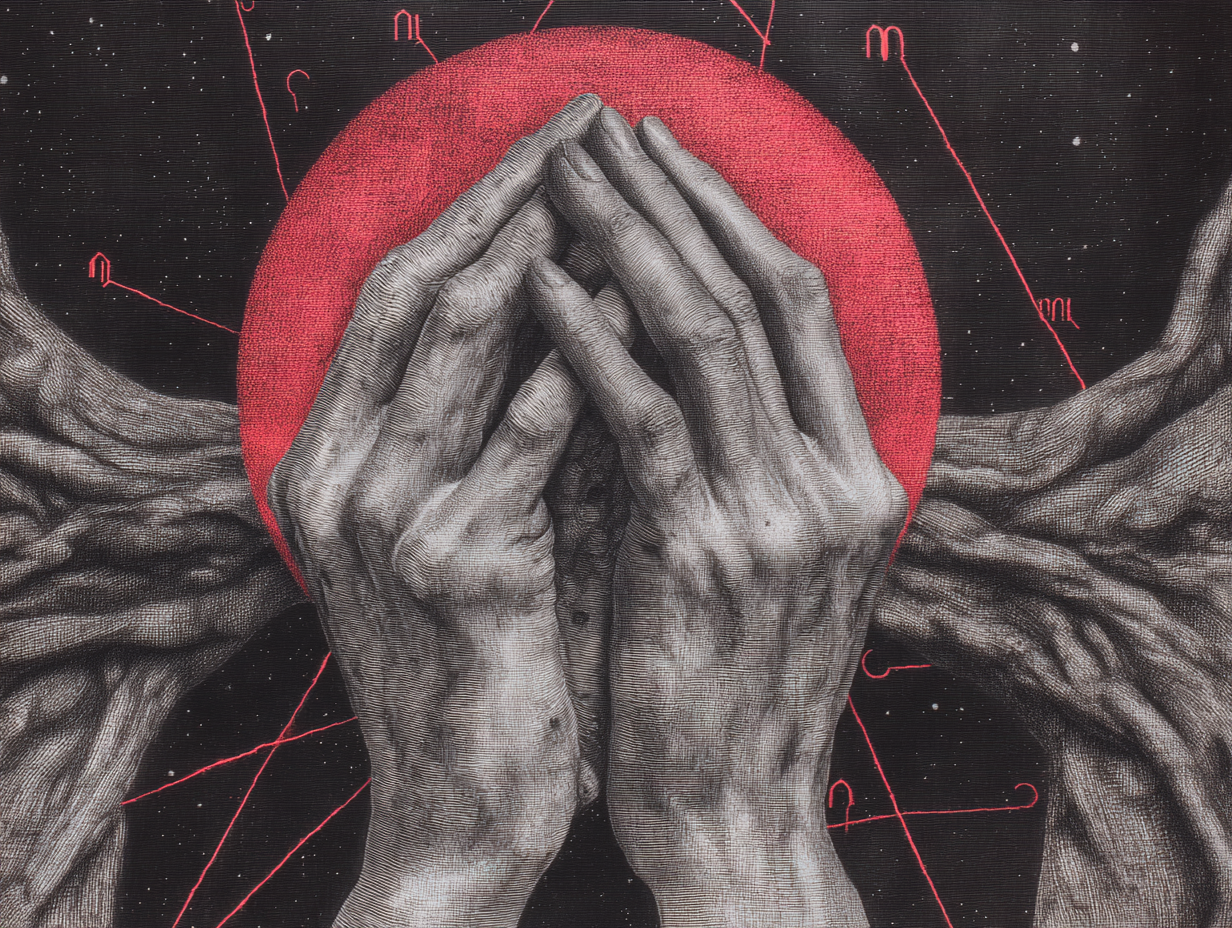
Behind the visuals of NNEL sits a loom, a space where images, ideas, and accidents are woven rather than produced.
My process is cyclical and porous, part method, part instinct. A piece might begin with a drawing, a photograph, or a fragment of writing, or in a dream, a memory, or something glimpsed while driving. A song lyric, a line in a book, or a half-remembered character can unravel into an entire series of images that later mutate, collapse, or spiral into something unexpected. Inspiration often arrives suddenly, even in the middle of the night, demanding to be rethought, reframed, rewritten.
I resist speed. Instead, I work through repetition, chance, and imperfection, sketching, photographing, writing, generating, layering, erasing, and returning. Images are fed back into language. Language fractures into visual form. Photographs are dismantled, rebuilt, and reimagined. Each work passes through multiple states, accumulating distortion, texture, and residue as it moves. What remains is not only an image, but the anatomy of its making, a record of how imagination, experience, and technology weave together. For me, it is about the melancholia of memory, the shock of presence, and the carnage of aftermath.
If prompts are used, they are never singular. They are informed by my writing, my images, my memory, and my obsessions, rewritten, inverted, stitched, fractured, pulled apart, and re-entered. The process itself does not change. When artificial intelligence enters, it is threaded through the same loom, another instrument folded into cycles of repetition, resistance, and return. I move images, language, and fragments through multiple systems, reworking, tuning, and rerouting until something unexpected surfaces. Its output is never an endpoint, only another raw state to be cut, layered, stitched, resisted, rewritten.
Each piece carries the trace of its becoming, fractured, unfinished, recursive. At times, real people emerge, reimagined as exaggerations, distortions, diminutives, or animals made human and vice versa. The work remains both deeply personal and slightly estranged, as if seen through a mirror that bends the light.
Through it all runs the red thread. Sometimes literal, sometimes implied, it marks fate, bloodline, and entanglement. It binds hand to machine, memory to myth, body to mechanism, accident to intention.